The Jeep Liberty shares its 5×114.3mm bolt pattern, 71.5mm center bore, and 16- or 17-inch stock wheel sizes with several other Chrysler, Dodge, and Jeep models from the same era. Matching all three of those numbers ensures the new wheels will fit your Liberty properly, not just the bolt circle. If you’re fitting a 2002–2007 KJ model, stick to 16-inch options; if you have a 2008–2012 KK, look at 17-inch donors. The offset also needs to stay within about 10mm of your factory setting.
Wheels that fit a Jeep Liberty
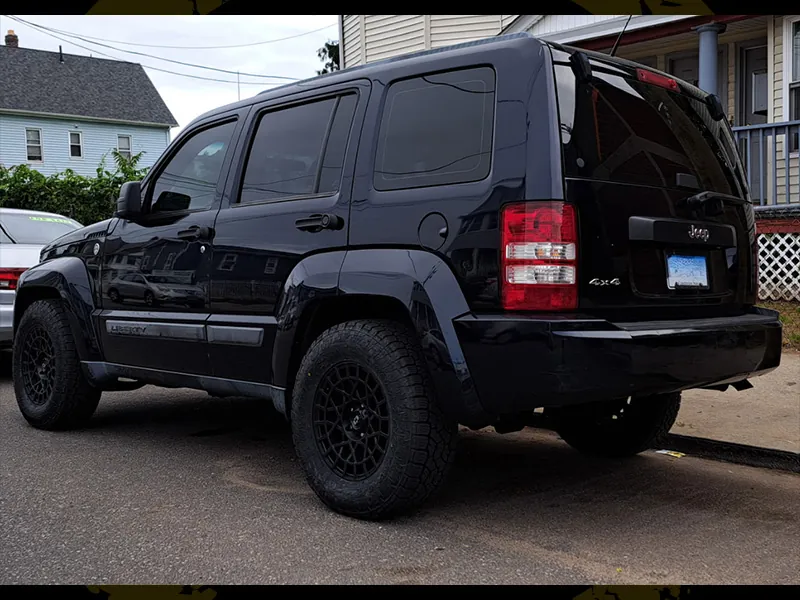
- Bolt pattern is 5×114.3mm (also written as 5×4.5 inches) on every Liberty year from 2002 to 2012.
- Center bore must be 71.5mm so the hub carries the vehicle’s weight instead of the lug nuts.
- A wheel with a larger bore will bolt on but vibrate at highway speed. You can fix this with hub-centric rings that step the opening down to 71.5mm.
- KJ models (2002–2007) came with 16-inch wheels; KK models (2008–2012) stepped up to 17-inch.
- Factory offset sits around +38mm to +44mm; staying within 10mm of this keeps steering geometry safe.
- Pushing offset too far negative moves the tire outward and loads the wheel bearings beyond their design limit. Expect premature bearing failure if you exceed that 10mm margin.
- Direct donor vehicles include the Dodge Nitro, Jeep Cherokee XJ (late 5-lug), and older Jeep Grand Cherokee WJ/ZJ.
- The Nitro shares the exact platform, making its wheels the safest used option.
- Check the stamped size on the inside barrel of any used wheel before buying it.
Why bolt pattern alone isn’t enough
A wheel bolts on when the holes line up, but it only drives safely when the hub fits tightly. The 5×114.3mm pattern is common across Chrysler, Ford, Honda, and Toyota vehicles. That shared spacing doesn’t make those brands interchangeable. The center bore matters just as much. A 71.5mm hole centers the wheel perfectly on the Liberty’s hub.
If you put on a wheel with a larger bore, like Honda’s 64.1mm won’t fit but a 72.6mm might slip over, the lugs carry all the force. That causes vibration at highway speeds and can shear studs under heavy braking. You’d need hub-centric rings to fill that gap, which adds another failure point off-road.
Offset changes where the tire sits in the wheel well. The Liberty’s factory offset pushes the mounting face outward by roughly 38mm to 44mm. A lower offset pushes the whole wheel toward the fender. This looks aggressive, but it loads the outer wheel bearing harder. Over time, that extra leverage wears the bearing out months earlier than normal.
Load rating is the invisible limit. The Liberty weighs around 4,000 pounds loaded. Passenger car wheels sharing the same bolt pattern often lack the strength for that mass. Using a light sedan wheel on a heavy SUV risks cracking the rim on a pothole. Always check the maximum load stamp on the back of the spoke.
You can verify these exact specifications for your specific trim by reading the tire placard on your driver’s side door jamb. It lists the original diameter, width, and recommended pressure. Jeep’s official owner resources provide detailed technical manuals confirming these factory dimensions for both generations.
When Liberty wheels don’t match directly
Not every swap goes smoothly. Different trims, lift kits, and brake packages change what clears the suspension. Here’s how the rules shift when your setup differs from stock.
| Situation | What changes | What to do instead |
|---|---|---|
| Upgraded big brake calipers | Inner barrel clearance shrinks | Use wheels with higher spoke offset |
| Lifted suspension over 2 inches | Fender rubbing occurs at full turn | Stick to factory offset, avoid wider tires |
| Using Dodge Nitro 20-inch wheels | Speedometer reads slower than actual | Reprogram PCM or accept speed error |
| Aftermarket wheels with 73.1mm bore | Hub-centric fitment is lost | Install 73.1mm-to-71.5mm aluminum rings |
| Steel wheels from a junkyard | Added unsprung weight hurts fuel economy | Accept heavier steering feel, check rust |
Big brake calipers eat into the space behind the spokes first. A wheel that clears a standard rotor will scrape an upgraded one. You need more spoke offset, not just a larger diameter.
Lifts over two inches change the steering arc entirely. The tire travels further outward at full lock. Wider rubber makes contact with the inner fender liner before you finish turning.
Dodge Nitro 20-inch wheels share the bolt pattern but carry a different rolling circumference. Your speedometer will lag behind your actual speed by several miles per hour.
Aftermarket wheels often use a 73.1mm center bore for universal fitment. Your Liberty hub measures 71.5mm exactly. Without machined aluminum rings, the lug nuts bear all the load alone.
Steps to swap Liberty wheels safely
- Park on flat ground, set the parking brake, and loosen the five lug nuts half a turn while the tire still touches the pavement. Jack up the corner using the frame rail point, then remove the nuts fully. This prevents the wheel from spinning while you break the torque.
- Clean the exposed hub surface with a wire brush until bare metal shows. Rust buildup here acts like a spacer, pushing the new wheel slightly off-center. Wipe it down with a clean rag so the mating surface sits completely flush against the brake rotor hat.
- Slide the replacement wheel onto the studs, making sure the 71.5mm center bore drops snugly over the hub lip. If it wiggles even a millimeter side to side, the bore is too large. Stop here and install hub-centric rings before moving forward.
- Thread all five lug nuts by hand first. Never use an impact gun to start them, because cross-threading a stud is inexpensive to avoid but costly relative to taking your time. Once they’re finger-tight in a star pattern, lower the jack until the tire barely touches the ground to hold it steady.
- Torque the lug nuts to 100 lb-ft using a calibrated click-type torque wrench, following the star sequence twice. The Liberty’s manual specifies this range for both 16-inch and 17-inch setups. Under-torquing lets wheels work loose; over-torquing stretches the studs past their yield point.
- Drive for exactly 50 miles, then re-check the torque on all five nuts. New wheels settle into the hub, and paint compresses slightly during the first heat cycle. Skipping this step leaves you guessing whether the joint is tight or slowly backing off on the highway.
- Turn the steering lock-to-lock in an empty lot to confirm clearance. Listen for scraping against the plastic inner fender liner or the sway bar end links. If you hear contact, the offset is wrong for your specific tire size, and you’ll wear through the sidewall quickly.
Liberty wheel swaps that fail
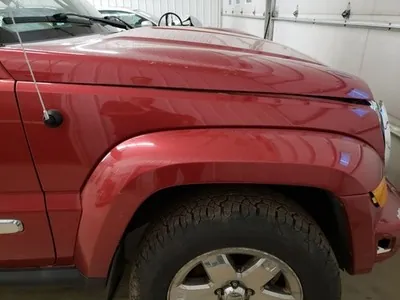
- Ignoring the center bore size. Bolt patterns match across dozens of cars, but forcing a 72.6mm bore wheel onto a 71.5mm hub without rings guarantees steering wheel shake above 50 mph and uneven tire wear within a few thousand miles.
- Using wheels meant for lighter cars. A mid-size sedan might share the 5×114.3mm pattern, but its rims aren’t built for a 4,000-pound SUV. Hitting a deep pothole bends the rim instantly, causing a sudden air leak that strands you roadside.
- Dropping the offset too far negative. Pushing the wheels out two inches past the fenders looks tough, but it multiplies stress on the ball joints. Expect to replace front suspension components years earlier than the factory schedule suggests.
- Mixing different wheel diameters front to rear. Putting 17s on the front and 16s on the back creates different overall tire diameters, causing constant rotational speed differences that the ABS and traction control systems interpret as wheel slip. The system sees different rotational speeds and triggers warning lights, disabling traction control when you actually need it.
- Reusing old, stretched lug nuts. Factory conical-seat nuts wear down after several removals. A rounded nut seats poorly against the wheel face, vibrating loose over rough roads and risking a detached wheel while driving.
Frequently asked questions
Can I put Dodge Nitro wheels on my Liberty?
Yes, the Dodge Nitro uses the exact same 5×114.3mm bolt pattern and 71.5mm center bore. Since both vehicles shared the same platform during the 2007–2012 overlap, their factory wheels swap directly without spacers or modifications. Just ensure you match the diameter—Nitro 16-inch wheels fit KJ models, while 17- or 18-inch options suit the KK generation.
Why does my swapped wheel vibrate at 60 mph?
Vibration at highway speeds almost always points to a center bore mismatch. If the wheel’s hole is significantly larger than the Liberty’s 71.5mm hub, the conical lug seats may not provide enough centering force under heavy loads. You’ll need a set of hub-centric rings sized specifically for your aftermarket wheel’s bore down to 71.5mm to eliminate the shaking.
How long should I drive before re-torquing new wheels?
Drive exactly 50 miles after installing any new or swapped wheel, then re-torque the lug nuts to 100 lb-ft. This short distance allows the paint and metal surfaces to compress and seat fully under the vehicle’s weight. Skipping this check risks the nuts loosening as the joint settles during normal driving.
Is it safe to use steel wheels from a junkyard?
Yes, provided they aren’t heavily rusted around the bead seat or the lug holes. Steel wheels handle impacts better than alloy off-road, but corrosion weakens the structure over time. Inspect the inner barrel carefully for pitting. If the rust flakes off in chunks, skip them—a compromised bead seat causes slow air leaks.
What happens if I use a wheel with the wrong offset?
Running an offset more than 10mm away from the factory +38mm to +44mm range alters your suspension geometry. Too low pushes the tire outward, scrubbing the fender liner during turns. Too high tucks the wheel inward, risking contact with the upper control arm or shock body. Both scenarios accelerate bearing wear significantly.
Does the wheel width matter for Liberty fitment?
Width dictates how the tire sits and clears the suspension. The factory 16-inch wheels are typically 7 inches wide, while 17-inch versions run 7.5 inches. Going wider than 8 inches usually requires checking clearance at full steering lock. If the tire bulges past the fender, state inspection laws may flag it.
How many lug nuts does a Jeep Liberty take per wheel?
Each wheel uses exactly five lug nuts arranged in a 5×114.3mm circle. Never leave one off to make a mismatched wheel fit. Driving on four lugs concentrates the clamping force unevenly, warping the brake rotor and stretching the remaining studs until they snap under hard braking.
Can I use hub-centric rings permanently?
Aluminum hub-centric rings are fine for daily driving and highway use because they act as precise spacers to center the wheel. However, they aren’t recommended for severe off-roading where extreme impacts occur. For heavy trail use, buy wheels with the exact 71.5mm bore machined in.
Conclusion
Before you buy a used set, take your Liberty for a short test drive with the new wheels bolted on. You’ll quickly feel if they rub against the brakes or fenders. Don’t skip this quick spin—it’ll save you a lot of headaches down the road.
Leave a Reply